A community communication strategy is about helping people feel informed, involved and heard. Whether you’re communicating with local communities, customers, stakeholders or members, having a clear strategy makes it easier to build trust, encourage participation and keep everyone moving in the same direction.
At NERDS, we help brands and organisations understand the people they’re trying to reach before deciding how to communicate with them. Through deep audience insight, cultural understanding and research-led strategy, we help uncover how different communities engage, and what drives meaningful conversations.
So, what is community communication?
Community communication is the ongoing exchange of information between organisations and the people they serve. It isn’t just about broadcasting messages or posting on social media. It’s about creating two-way conversations, choosing the right communication channels and making it easy for people to ask questions, share feedback and stay connected.
In this guide, we’ll explore what makes an effective community communication strategy, along with seven practical ways to improve communication, strengthen engagement and create more meaningful relationships with your audience.
Quick Navigation
- Why Should You Develop A Communication Plan?
- When Should You Develop A Communication Plan?
- Community Communication Strategy Template
- 7 Tips for Creating a Communications Strategy
- Social Media and Community
- FAQs
Why Should You Develop A Communication Plan?
Developing a communication plan is one of the most important steps you can take when working with others. Not only will it ensure that your messages are received and understood, but it can also help prevent misunderstandings and potential conflicts. Here are some reasons why you should develop a plan:
- It can help avoid confusion. When messages are not transparent or consistent, it can lead to misunderstandings and disagreements. A well-crafted communication plan will ensure that all participants know what is expected of them and what exchanges will take place. NEW: This supports message consistency and clearer information exchange.
- It can improve efficiency. When messages are sent and received promptly, it saves time and energy. If everyone is on the same page, there is less chance of conflict or confusion down the road.
- It makes relationships stronger. A strong relationship requires effective communication between both parties. In community settings, this also supports stronger stakeholder engagement and public engagement.
When Should You Develop A Communication Plan?
When communicating with others, it is essential to have a plan in place. This means being aware of the different communication channels available to you and planning accordingly. There are many factors to consider when developing a communication plan, such as the time of day, the person you are communicating with, and the message you are trying to send.
The following list provides some general tips for planning your communication:
- Planning will help avoid potential conflict and ensure your message is delivered successfully.
- Consider who you are messaging and find out when (day time or night time) they may be more likely to be receptive.
- Take into account any cultural differences when drafting your message. For example, certain words or phrases may carry different meanings in different cultures.
- Be aware of your body language and how it might be interpreted by the other person.
- Do a quick target audience analysis first – who needs to know, what they care about, and what action you want them to take.
Community Communication Strategy Template
Use this simple structure to create a community communication strategy that stays clear and consistent.
- Goal: What are you trying to achieve (public awareness, participation, safety, support)?
- Audience: Who are you speaking to (residents, members, partners, stakeholders)?
- Key messages: 3–5 points you repeat across channels (message consistency).
- Channels: Where information will live (hub, email, social media, local partners).
- Feedback mechanisms: How people respond, ask questions, or share concerns.
- Measurement: What “good” looks like (engagement, attendance, questions answered, fewer misunderstandings).
7 Tips for Creating a Communications Strategy that Connects Your Community
1. Create A Centralised Communications Hub
Goal: Give people one trusted place for updates and information exchange.
The benefits of creating a centralised communications hub are many. First and foremost, it can help your community stay connected. This can be especially important if you have a large population spread out across multiple municipalities or if you have a small population that is difficult to reach.
A communications hub can also help improve public safety. By consolidating communication resources, you can better disseminate information about emergencies and events and ensure that all residents are aware of current happenings.
Finally, a centralised communications hub can reduce the communication cost for your community. By centralising your messaging, you can reduce the need for individual members to purchase separate communication tools, such as pagers or cell phones.
A hub also improves digital outreach by making it easier to find event updates, key contacts, and official messaging.
2. Use Your Community’s Opinions
Goal: Build feedback into the strategy, not just at the end.
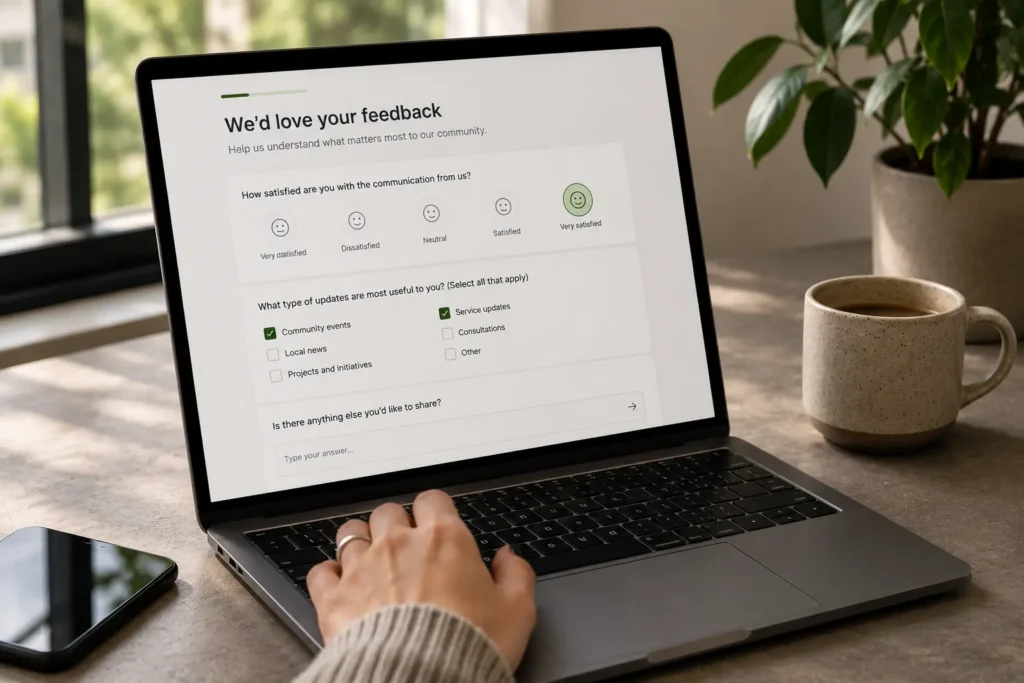
Communication strategies play a critical role in building and maintaining relationships with your community. However, many organisations do not consider the opinions of their community when developing their communication plans. Here are three tips for incorporating community feedback into your communications strategy:
- Start by understanding your community’s needs and wants. This information can be found through surveys, focus groups, or interviews with community members. Add simple feedback mechanisms like polls, drop-ins, or Q&As.
- Use social media to reach out to your community. Use platforms like Twitter, Facebook, and LinkedIn to share news, updates, and events that are important to them.
- Create content that is interesting and useful to your audience. This can be accomplished by writing blog posts, creating videos, and uploading photos showcasing your work in the community.
3. Build A Sense Of Community
Goal: Support group participation and collaborative dialogue.
Community connection is one of the essential factors in any communications strategy. By building a sense of community, businesses can connect with their customers and employees more effectively. Here are some tips for creating a communication strategy that connects your community:
- Address your community’s concerns. When building a community connection, it’s essential to identify what the residents want and need. This way, you can provide tailored services and information that will benefit everyone involved.
- Listen to your residents. When creating a communication strategy, it’s essential to pay attention to what your residents are saying. They may have valuable insights into how you can improve your overall relationship with them.
This is where community and communication work best: shared interests, mutual understanding, and consistent public engagement.
4. Celebrate Your Community
Goal: Strengthen trust by recognising what matters locally.
One of the most critical aspects of creating a successful communications strategy is understanding your community’s needs and wants. By celebrating your community’s unique characteristics, you can create a stronger connection with them that will result in positive outcomes.
There are many benefits to acknowledging and celebrating your community. These include strengthening relationships, improving communication, and building trust.
One of the primary uses for a communications strategy that connects with your community is to improve public safety. When citizens feel connected to their government, they are more likely to report crimes and maintain good relationships with law enforcement officers.
Trust is another significant benefit of a well-crafted communications strategy that connects with your community. When citizens have faith in their government, they are more likely to cooperate with requests for information or assistance.
Consistent storytelling and simple visual branding can help people recognise official updates quickly.
5. Track engagement
Goal: Learn what lands, then improve future messaging.
One of the most important aspects of any communications strategy is how it connects with your community. However, connecting with your community can be difficult and time-consuming. That’s why it’s important to track engagement as one of the tips for creating a communications strategy that connects your community.
The benefits of tracking engagement are numerous. You can see which methods are working well and which need improvement. Additionally, you can use this information to tailor future messages to better connect with your audience.
The advantages of tracking engagement include gaining insight into what topics resonate with your audience and determining the best times and channels to share specific messages. Tracking engagement also allows you to measure the effectiveness of your outreach efforts and determine whether or not you need to adjust them accordingly.
What to track
- Comments and questions (are messages clear?)
- Shares / saves (public awareness)
- Event interest and attendance (community outreach)
- Clicks to your communications hub (information exchange)
What it tells you
- What topics matter most to your target audience
- Which channels perform best for social interaction
- Whether message consistency is working across platforms
6. Keep Message Consistency Across Channels
Goal: Reduce confusion by aligning every channel to the same key message.
When messages are not transparent or consistent, it can lead to misunderstandings. A community communication strategy works best when the same information shows up clearly across your hub, social posts, emails, and partner channels.
Quick ways to stay consistent
- Use a short “key messages” note internally
- Repeat key details (dates, times, actions) in the same format
- Keep language simple and accessible
7. Plan for Crisis Communication
Goal: Share timely updates that protect trust in high-pressure moments.
Crisis communication matters when rumours spread, situations change quickly, or safety is involved. Having a plan helps you communicate clearly through the right channels and support public engagement.
A simple crisis checklist
- One source of truth (your hub)
- Regular updates, even if there’s “no change”
- Clear next steps and contact routes
- A way for people to ask questions and get help
Social Media and Community
Social media and community go hand-in-hand because platforms make it easier to support day-to-day information exchange, group participation, and public awareness. It’s also where feedback arrives quickly — and where misunderstandings can spread just as fast.
Practical ways to use social media in community communication
- Share updates in language that is easy to understand
- Use collaborative platforms (groups, community pages) to encourage dialogue
- Promote event planning and local activities
- Build media partnerships to extend reach (local press, schools, community leaders)
- Create space for questions to support mutual understanding
FAQs
What are community communication plans?
Communication plans are systems that enable effective communication within a community. Two-way communication and systematic information sharing are made possible by it.
What is the importance of community communication?
Communication with communities in a timely, accurate, and relevant manner ensures that they receive information in a language, format, and channel that is culturally appropriate and accessible.
What should a community communication strategy include?
A community communication strategy should include clear goals, key messages, a communications hub, chosen channels, feedback mechanisms, and simple ways to track engagement.
How do you measure whether community communication is working?
You can measure community communication through engagement, questions asked, attendance at events, repeat visits to your communications hub, and whether fewer misunderstandings occur over time.
What are good feedback mechanisms for community outreach?
Good feedback mechanisms include surveys, comment threads, drop-in sessions, Q&As, polls, and direct contact routes – anything that makes information exchange two-way.
H3: What is the difference between a communication plan and a community communication strategy?
A communication plan outlines what you’ll send, to who, and when. A community communication strategy is broader — it shapes how you build relationships, create two-way dialogue, and stay consistent across channels.
Final Thoughts: Community Communication Strategies
In conclusion, a community communication strategy is key to engaging and connecting with the residents of a given community. By understanding the needs and wants of its constituents, a municipality can develop an effective plan to reach out and connect with its residents.
Beyond simply broadcasting announcements or issuing press releases, a community communication strategy should involve engaging with key stakeholders and developing relationships based on mutual trust.
Strong community communication is two-way. With consistent messaging, simple feedback routes, and thoughtful social media management, communities stay informed and involved.
Better community communication starts with better audience insight
The most effective community communication strategies are built when you understand how your audience thinks, what they value, and how they engage.
That’s where NERDS comes in. We combine market research, cultural insight and audience understanding to help organisations communicate with clarity, build stronger relationships and create campaigns that genuinely resonate with the communities they’re trying to reach.
Our expertise: