Emotional branding is often reduced to a single move: make the brand more aspirational, make it more visible, attach it to the right people, and give the audience enough social proof to make wanting it feel safe. That still works sometimes, but it often doesn’t explain enough of what’s actually happening when a brand becomes genuinely desirable.
At NERDS, this is the question we spend most of our time inside – not what makes a brand visible to a youth audience, but what actually makes it wanted by one. And right now, some of the most interesting brands are building that desire in less obvious ways. They change the emotional job a product does, and that shift is what changes the kind of desire the brand can create – not heat around the brand, but a change in how someone feels once it’s entered their life.
Studio Nicholson, Crocs and On are useful case studies here because they don’t teach the same lesson. One is quiet. One is awkward. One is disciplined. None of them fits the old idea that desire is built simply by making a brand feel cooler, rarer or more aspirational, which is exactly why they’re worth examining.
Quick Navigation
- What Is Emotional Branding?
- What Is Brand Desirability?
- Why Emotional Branding Doesn’t Require a Luxury Price Tag
- Example: Studio Nicholson
- Example: Crocs
- Example: On
- Why Brand Desire Is Becoming Less Obvious
- How to Make a Brand Desirable: A Framework
- FAQs
What Is Emotional Branding?
Emotional branding is the practice of shaping how a brand makes people feel, rather than relying only on product features or price to drive a decision. It works by giving the product an emotional role in someone’s life – whether that’s confidence, belonging, permission, relief or something else the category has traditionally overlooked.
What Is Brand Desirability?
Brand desirability is the extent to which people actively want to buy into what a brand represents, not simply recognise or respect it. A brand can be well-known, well-reviewed and rationally sound without being desirable – awareness and desire aren’t the same thing. Desirability shows up once a brand starts changing how someone feels about themselves, not just what they think about the product. That’s the real relationship between the two ideas: emotional branding is the mechanism; brand desirability is the result it’s aiming for.
Why Emotional Branding Doesn’t Require a Luxury Price Tag
Brand identity and consumer psychology are more entangled than most brand strategy admits. People don’t experience a product and a feeling separately, the feeling is part of how the product gets read, used, and talked about. A strong emotional connection changes brand perception in ways a features list never will, which is why trust-building and consistency matter as much as the initial hook.
It would be easy to assume that price does most of this work – that a premium position naturally creates desire, and that the more exclusive or expensive a brand is, the more people will want it. Our own Frontline research suggests otherwise.
When we asked young fashion fans which brand they’d most go for if money were no object, Zara (193 mentions) was the single most frequently named aspirational brand among the fashion shoppers we surveyed, beating luxury brands like Gucci (160 mentions) and sportswear icons like Nike (134 mentions).
Source: Frontline Fashion & Style Survey, 2025 (UK fashion shoppers aged 16–35, n=2,111)
That’s the thread running through all three case studies below: none of them build desire through exclusivity or price. They build it through the emotional job the product does.
Studio Nicholson: Emotional Branding Through Quiet Confidence
Studio Nicholson is often described through restraint, but restraint on its own isn’t very interesting – plenty of brands are quiet, and not many make quietness feel commercially alive. The stronger read is that Studio Nicholson has made proportion feel like a form of confidence, and it’s this specific brand perception that creates the pull to buy in.
The clothes don’t ask the wearer to perform too much. There’s no logo doing the talking, the collections are designed with enough continuity that older pieces can sit alongside newer ones without the wardrobe feeling visibly reset each season. That’s the actual mechanic behind it: the wearer isn’t choosing a single hero item, they’re building a wardrobe where every piece works with the others, which removes a decision they’d otherwise have to make every morning.
That’s a concrete kind of desire, not just an aesthetic one. A lot of modern buying is really an attempt to reduce social effort – fewer decisions, less risk of getting it wrong, less need to explain a choice.

Studio Nicholson sits inside that tension well – its growth isn’t only a story of minimalism becoming popular again, but one about legibility, giving people a way to look precise without looking over-managed.
Crocs: Brand Desire Without Looking Perfect

Crocs answers this differently to most brands. Its perceived value doesn’t come from beauty or exclusivity, but from making awkwardness part of the appeal. The shape remained strange, while the product remained visible. Crocs didn’t become interesting by hiding the thing people mocked.
Awkward products create a different kind of desire from beautiful ones. A beautiful object asks to be admired; an awkward object asks the wearer to take a position. You have to know what you’re doing, accept the joke or refuse it, or turn the joke into part of the look – that gives the product a social charge that a more tasteful object might never have. Crocs also understood that self-expression works better when the product leaves room for the wearer to interfere with it. The clog isn’t precious. It can be customised, made ridiculous, made sentimental, made fashion, made practical again, and its identity is elastic enough to survive bad taste, which is more valuable than many brands realise.
Most brands try to protect desire by controlling meaning. Crocs built its emotional connection with buyers by making meaning unusually open, giving people permission to be a little wrong on purpose – and in a culture where so much taste has become careful, copied and over-optimised, that permission has real value.
On: Selling Capability, Not Athletic Identity
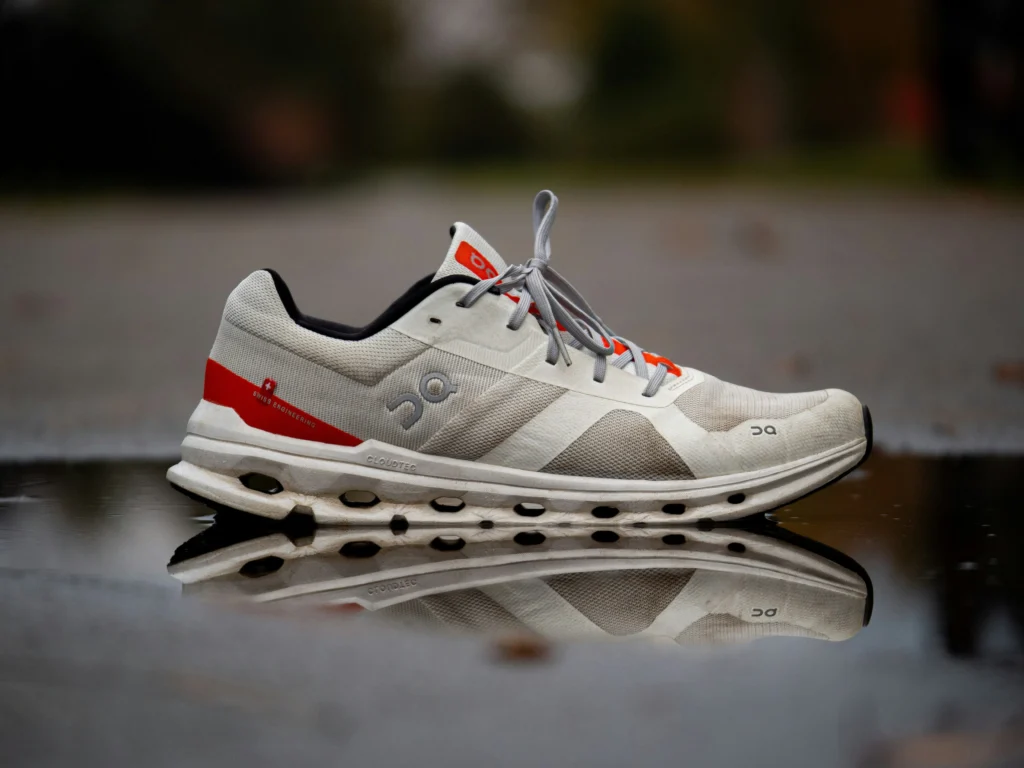
On is often read as a performance brand that crossed into lifestyle. That’s true, but the more interesting story is what it changed about wearing performance gear at all. Its shoes carry none of the usual signals of a running shoe – no aggressive tread, bold branding, or colour that announces sportswear from across a room. That’s a deliberate design choice.
A lot of sportswear desire has historically been built around intensity: competition, transformation, effort, victory. On is softer than that, but not weak. Its version of performance feels controlled, premium and self-respecting. It lets someone borrow the functional benefit (comfort, support, the sense of being physically capable) without buying into a full athletic identity.
This is why the brand’s lifestyle expansion works rather than reading as a stretch. The technical promise doesn’t get diluted when the shoe leaves the gym – it’s the same shoe, doing the same job, just in more places.
On isn’t asking the wearer to perform effort. It’s letting them carry the benefit of it without the performance, which is a narrower and more specific promise than most sportswear makes.

Why Brand Desire Is Becoming Less Obvious
These three brands are worth examining together because none of them build brand desirability the way the traditional playbook says they should.
The obvious move for Studio Nicholson would have been to make quiet luxury louder once the category became crowded: a more recognisable signature, a hero product, a clearer way for people to signal that they were wearing it. Instead, it has stayed remarkably restrained.
Crocs could have tried to make an unconventional product conventionally attractive; instead, it did the opposite, and let the awkwardness become the point – removing the pressure to have impeccable taste, rather than trying to help people meet it.
On could have built itself around the intensity, discipline and achievement that sportswear has traditionally used to motivate people, but most people buying a performance shoe aren’t training for a race – they’re commuting, running errands, doing a gym class twice a week.
A typical performance brand still markets to the athlete anyway, selling an identity most of its actual buyers don’t have and were never going to reach. On designed-out that gap instead, ensuring nothing makes someone feel like they’re borrowing a costume they haven’t earned.
That’s the more interesting emotional branding lesson underneath all three brands: stop automatically selling people the elevated version of themselves a category usually markets to, and start looking more closely at the person actually buying it. Studio Nicholson isn’t selling a stylist’s wardrobe. Crocs isn’t selling perfect taste. On isn’t selling an athlete. Each one looked past the aspirational customer their category usually chases and built for the real one instead.
How to Make a Brand Desirable: A Framework
These examples aren’t a formula to copy. What they offer is a useful way to diagnose where desire might come from in a category – particularly when the established playbook is starting to feel predictable.
At NERDS, we’d start by looking at the gap between what the category keeps telling people to want and how people actually want to feel.
1. Identify the category’s emotional default.
Go beyond visual conventions and look at the feeling brands repeatedly sell. Does luxury promise recognition? Does sportswear equate progress with discipline? Does beauty still rely on perfection? The important question isn’t simply what competitors are doing, but what emotional role they’re collectively asking people to buy into.
2. Find where that promise creates friction.
This is where cultural and audience insight matters. Look for the behaviours that suggest people are tiring of the category’s established rules: what they’re joking about, rejecting, hacking, wearing differently, talking about privately or refusing to take as seriously as brands expect them to. Crocs becomes more interesting when you understand the appeal of opting out of polished taste; On when you recognise that wanting to feel active doesn’t necessarily mean wanting an athlete identity.
3. Decide what your brand can credibly do differently.
The answer isn’t automatically to oppose the category. It has to make sense for the product and the people buying it. Studio Nicholson can make restraint desirable because restraint runs through the product, styling and brand world. Crocs can give people permission to play because the product itself invites it. On can soften the codes of performance because the experience of the product supports that promise.
4. Build the feeling through the whole brand, not just the campaign.
Emotional branding becomes convincing when the same idea survives beyond communications. Product, design, collaborations, retail, community, casting, language and experience should all reinforce the emotional role the brand wants to occupy. Otherwise, what looks distinctive in a campaign quickly becomes familiar at the point of purchase.
The useful question, then, isn’t simply “How do we make this brand more desirable?” It’s: what does this category currently ask people to perform, and is there a more relevant feeling our brand can credibly give them instead?
That’s where cultural insight earns its place. It gives brands evidence for where established ideas of aspiration are losing relevance, what audiences are replacing them with, and which of those shifts a brand has permission to build around.
What Could Make Your Brand More Desirable?
That’s exactly the question Frontline – NERDS’ proprietary cultural intelligence and youth insights platform – is designed to help answer.
Frontline puts us inside the communities, scenes and subcultures where cultural change becomes visible early. We use that proximity to uncover the tensions audiences are navigating, understand where established category codes are losing relevance, and identify the emotional territory brands have a credible opportunity to occupy.

- 20,000+ Gen Z contributors across grassroots, subculture and inner-city communities
- Real-time access to early adopters across TikTok, Twitch, Discord and emerging cultural spaces
- Qualitative insight at quantitative scale, combining cultural depth with robust audience evidence
- Audience segmentation and psychographic profiling to uncover the motivations, values and tensions driving behaviour
- Cultural trend analysis translated into actionable brand, creative and campaign opportunities
Want to know where your brand has permission to do something different? Talk to NERDS 🤓
FAQs: Emotional Branding & Brand Desire
How long does it take for emotional branding to change how a brand is perceived?
There is no fixed timeline for emotional branding to change brand perception. The speed of change depends on how established existing perceptions are, how distinctive the new emotional position is, and how consistently audiences experience it across product, communications, retail and culture. A campaign can introduce a new idea quickly, but changing what people instinctively associate with a brand usually requires repeated evidence. The useful measure isn’t simply time elapsed; it’s whether the intended associations are beginning to appear in how audiences describe, choose and talk about the brand.
Is brand desire the same as brand awareness?
No. Brand awareness is whether people know a brand; brand desire is whether they want what that brand represents. High awareness can put a brand into the consideration set without giving people a compelling reason to choose it. Desire is built when the product and brand meaning connect with something the audience values emotionally or culturally – whether that’s status, belonging, self-expression, confidence or, as the case studies above demonstrate, permission to step away from some of those expectations altogether.
What’s the risk of getting emotional branding wrong?
The biggest risk is creating a gap between the emotion a brand communicates and the experience it actually delivers. If a brand claims rebellion while behaving conventionally, talks about community without participating in one, or sells individuality through the same cultural codes as every competitor, audiences have little reason to believe the positioning. This is why emotional branding can’t be treated as a communications exercise alone: the intended feeling has to be credible in the product, behaviour and wider brand experience.
How often should a brand revisit its emotional positioning?
A brand shouldn’t revisit its emotional positioning simply because a certain amount of time has passed. The better trigger is evidence that the audience, culture or category around the position has changed. At NERDS, we’d look for signals such as competitors converging on the same territory, established status symbols losing relevance, audiences adopting or rejecting category codes in new ways, or an emerging tension that the existing positioning no longer speaks to. The objective isn’t constant reinvention; it’s knowing when the cultural meaning underpinning the position has moved.
Do challenger brands need a different emotional branding approach than market leaders?
Challenger brands often have a different emotional branding job to market leaders. An established brand may already have years of recognition, associations and cultural meaning working in its favour; a challenger has less inherited meaning to rely on. That can make specificity more important. Rather than trying to reproduce the category leader’s version of aspiration on a smaller scale, challengers can look for the audience tensions, identities or emotional needs that established brands are overlooking and build a more distinctive position around them.
Build Your Next Brand Strategy With NERDS Collective
The gap between a category’s obvious move and what a brand could credibly do instead isn’t always easy to see from inside a business. That’s where NERDS comes in – helping brands find the emotional territory they have genuine permission to occupy, then building it through the whole brand rather than a single campaign.
Every category has an obvious move. The desirable brands are the ones that didn’t take it.
See our case studies 📚 · Book a discovery call with NERDS 🤓
Explore NERDS Collective’s capabilities: