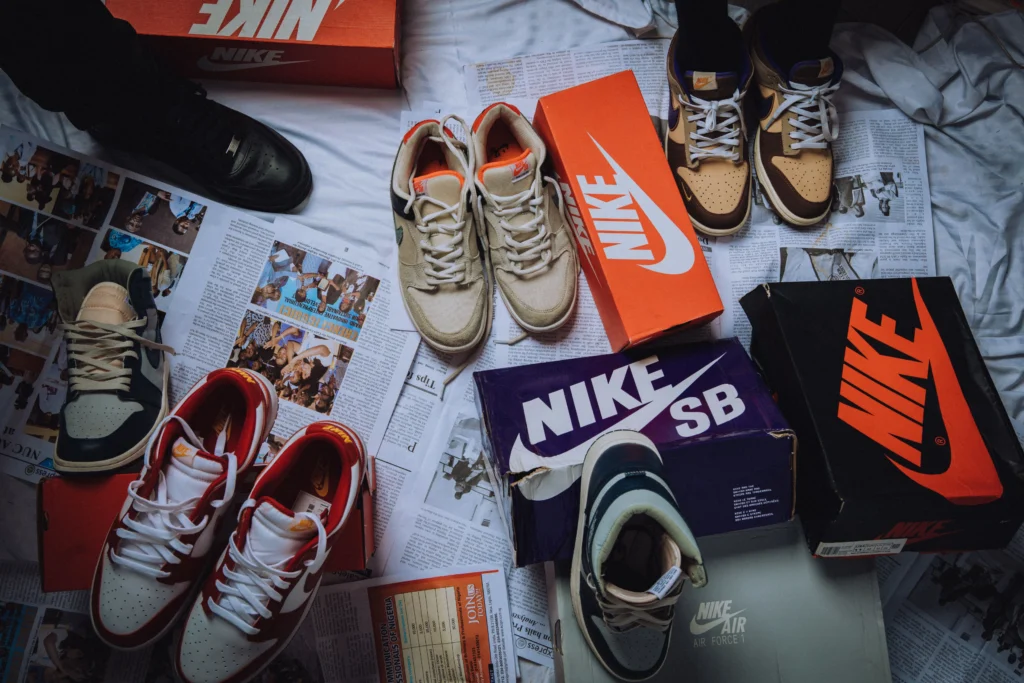
Collaboration saturation is not a theory. Walk through any sportswear drop, scroll any brand feed, or open any culture publication and the evidence is there: two logos, a limited run, a campaign that lasted a week. Then another. Then another.
Brand collaborations became the default move so quickly that most brands stopped asking whether they should do one and started asking who they should do it with. The result is a market where the format itself has lost the ability to signal anything. When every brand has a collab in market, no single collab stands out. The audience stops paying attention, and the brands that depended on borrowed heat start to wonder where it went.
NERDS has spent over a decade working inside the cultures that make or break these decisions. Using Frontline, our proprietary cultural intelligence platform built around more than 20,000 Gen Z contributors, we map the specific communities a brand has genuine permission to enter before a partner is even identified. The collabs that still cut through share one thing: they had a genuine cultural reason to exist before they had a commercial one. This piece draws on NERDS’s own work and the wider cultural landscape to break down what goes wrong with brand collabs, and what the fix actually looks like in practice.
Quick Navigation
- What is collaboration saturation?
- Why do brand collaborations fail?
- Why the product matters more than the campaign
- What is brand equity dilution and how do collaborations cause it?
- How audiences spot an inauthentic brand collaboration
- NERDS case study: Havana Club x Skepta
- How to avoid collaboration saturation: The Cultural Fit Test
- The future of brand collaborations: why cultural relevance beats reach
- FAQs
What is Collaboration Saturation?
Collaboration saturation is the point at which the volume of brand partnerships in a given market exceeds the audience’s capacity to find them meaningful. It’s not a signal that collaboration as a strategy is broken. It’s a signal that most brands are doing it wrong.
The category became crowded because collaboration is an attractive shortcut. It promises novelty, attention, and borrowed heat. It gives brands something to announce when the product pipeline feels predictable, makes an established brand feel active, and makes a younger brand feel larger than it is.
Most of those announcements land and are forgotten within a week. The product shifts briefly, the post travels for a moment, and then both brands return to where they were, with slightly less equity than before.
The collaborations that avoid this are the ones with a cultural reason to exist before they have a commercial one.
Why do Brand Collaborations Fail?
Most collaborations start from a shallow idea of fit.
The brands share an audience, have a similar tone, and sit near each other in culture. The overlap is easy to explain in a meeting, which makes the partnership feel safe. But similarity can also make the work feel pointless – if both brands already mean the same thing, the collaboration has nothing new to produce.
Tension is more useful than similarity, and the strongest partnerships have usually understood this. One brand brings discipline to another. One makes the other feel more playful. One opens a different social context. One changes the temperature of the product without breaking either brand’s identity.
This is also where misaligned brand values become visible to the audience before they become visible to the brands themselves. A partnership that looks coherent on paper often exposes a target audience mismatch the moment it hits the real world, two brands assuming they share a community when they only share a demographic.
That shift needs to be legible. The audience doesn’t need to hear the strategy, but they should be able to feel the reason. A good collaboration produces something that could only have come from these two brands together. A lazy one simply proves that a deal was made.
Why the Product Matters More Than the Campaign

Collaboration gets discussed as a marketing move, but the product does the hardest work.
If the object feels weak, no amount of cultural explanation can save it. Audiences are generous with a strange idea when the execution has conviction. They’re much less generous when the product looks like a licensing exercise with a press release written around it.
This is where insufficient planning and overly ambitious expectations tend to expose themselves at the same time. The campaign is more interesting than the thing being sold. The launch story has more energy than the object. The partnership makes sense as content, but not as something anyone would actually want to own.
That imbalance reveals a fundamental problem: collaboration asks the audience to believe in a new relationship, and the product is the evidence for that relationship. Weak evidence makes a weak case, regardless of how well the story is told around it.
A good collaboration makes the product feel inevitable once you’ve seen it. Before it exists, it might sound surprising. Once it lands, the logic should be obvious. Collaboration is asking for extra attention in a market already full of announcements, and it needs to earn that attention with the object first.
Creativity vs. Originality: Why They’re Not The Same Thing
A creative collaboration recombines familiar elements in a new configuration. An original one produces something that couldn’t have come from either brand alone.
Most of what gets released in the name of collaboration is creative – the market is full of creative collaborations. Originality is rarer, harder to plan for, and significantly harder to fake, which is exactly why it cuts through when it happens.
What is Brand Equity Dilution and How Do Collaborations Cause it?
Every collaboration is an exchange of meaning. That exchange can strengthen both brands, but it can also dilute them in ways that don’t show up in the launch week numbers.
A brand that collaborates too frequently starts to feel restless. One that picks the wrong partner, or uses collaboration to chase every adjacent audience, can end up less legible than it was before, with an inconsistent messaging problem it didn’t anticipate at the briefing stage.
The short-term indicators can hide this. The product shifts, the post travels, but the brand still has to live with the meaning it’s borrowed and the meaning it’s given away. Over time, a collaboration strategy built on opportunism rather than cultural conviction produces a brand that stands for progressively less.
IKEA’s work with Virgil Abloh is still referenced years later because it had a clear cultural job. It treated ordinary domestic objects as things that could carry status, humour, and commentary without losing their everyday function. It didn’t simply attach a famous name to a household product category, it changed the way that category could be read.
That’s the difference between borrowing equity and generating it. The collaboration didn’t just take something from Abloh’s cultural authority; it produced something new that neither IKEA nor Abloh could have produced without the other. The object itself became the argument.
How Audiences Spot an Inauthentic Brand Collaboration
Audiences spot an inauthentic brand collaboration because the commercial logic is visible before the cultural one is. The audience target is legible. The equity gap between the two brands is legible. The attempt to borrow youth credibility, or feel more premium, or more street, or more culturally fluent, is legible. When a partnership hasn’t developed a genuine cultural reason to exist, that absence shows in the work itself: in a product that feels like a licensing exercise, in campaign language that performs togetherness without demonstrating it, in a launch story with more energy than the object it’s selling.
Gen Z is fastest to call this out because they don’t respond to broadcast logic in collaboration. They respond to belonging signals: the sense that a partnership understands and respects the specific community it’s entering, rather than treating that community as a distribution channel for reach. Brands that build partnerships by thinking about audiences tend to produce collaborations that perform on paper and fall flat in culture. Brands that think in communities tend to produce something the audience feels a degree of ownership over, because the partnership was built with that community in mind rather than aimed at it from the outside.
The rejection isn’t of commercial collaboration itself. It’s of the ones where the commercial logic is the only logic the audience can feel. A collaboration can sell and still be respected – people know brands need to make money. They also know when a product’s been made with care, when the exchange between two brands has been generous, and when what’s been created has a life beyond launch week. The work doesn’t need to hide the business ambition, it needs to make the cultural reason strong enough to carry it.
How to Avoid Collaboration Saturation: The Cultural Fit Test
Most brand collaboration strategies fail before a partner is chosen, because the wrong question is being asked. The question is usually: which brand would our audience recognise next to ours? The more useful question is: which cultural community are we trying to enter, and do we have genuine permission to be there?
These four questions are worth answering before any collaboration moves past the concept stage.
- What can we make true together that neither of us could make true alone? If the honest answer is “not much,” the partnership is probably a reach exercise rather than a cultural one. A collaboration that only proves a deal was made isn’t worth the equity it costs.
- Does the tension between us create something, or does it just explain why we’re similar? Similarity produces safe, forgettable work. Productive tension, where one brand genuinely shifts the meaning of the other, is what creates something worth paying attention to.
- Is the product the proof, or is the campaign doing all the work? If the campaign is more interesting than the object, the collaboration has already failed its most important test. The product needs to carry the idea without the story around it.
- Which specific community are we entering, and do we have genuine permission to be there? Not which demographic, which community. And not assumed permission based on brand adjacency, but real cultural permission backed by insight into how that community actually reads both brands.
A brand that can answer all four questions clearly is in a position to build something with longevity. That said, a framework can only take you so far. Knowing the right questions to ask is a starting point, answering them accurately requires genuine cultural intelligence.
The difference between a collab that lands and one that gets called out often comes down to the depth of insight behind the decision, and that’s rarely something a brand can build in-house with the speed and specificity the market demands. It’s exactly the kind of problem NERDS audience insight and cultural marketing expertise is made to solve.
NERDS Case Study: Havana Club x Skepta
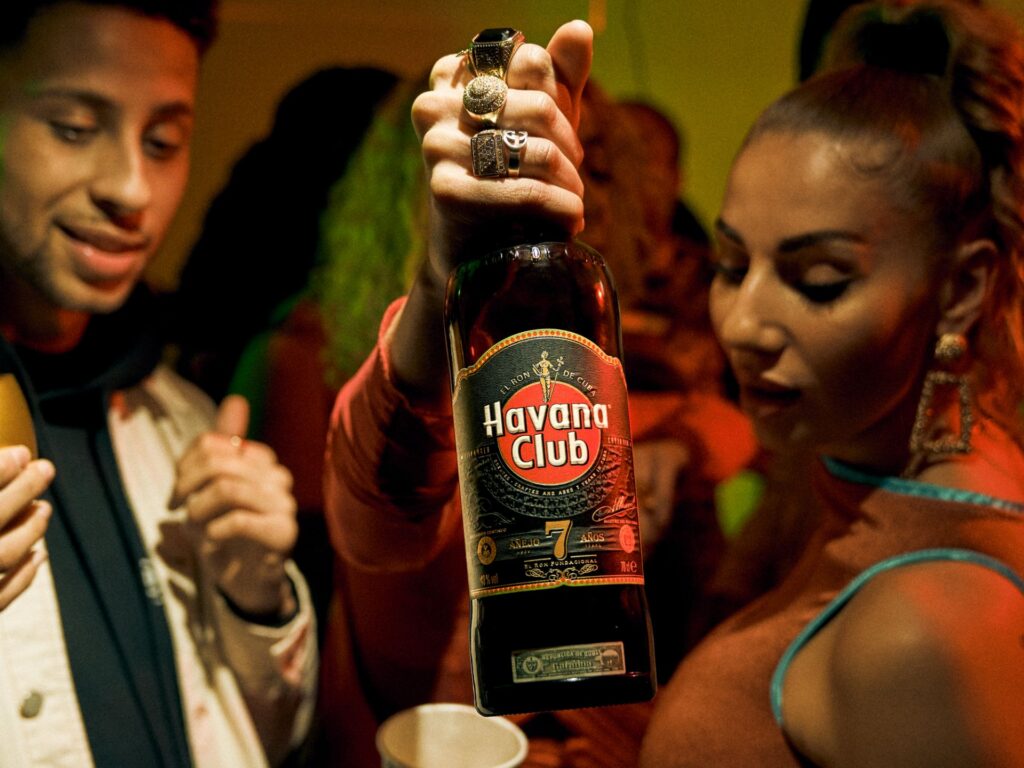
Havana Club needed to reach a specific consumer: streetwear-influenced, culturally active, with a genuine relationship to rum as a category. The challenge wasn’t finding a famous name to put next to the brand, it was identifying which subcultural communities Havana Club had real permission to enter, and who inside those communities could open the door credibly.
NERDS used Frontline, our in-house cultural intelligence platform built around more than 20,000 Gen Z contributors and mapped against 52 million street-culture youth across Europe and North America, to answer that question with data rather than instinct.
What the research identified was a specific community with a genuine cultural relationship to the product category, and a clear picture of which talent had real credibility within that community, rather than simply broad name recognition.
The result was a long-term global talent partnership with Skepta: not a one-off campaign placement, but a sustained cultural relationship between the brand and one of the most credible figures in British streetwear and music. European sales increased by 19% within 12 months of the campaign launch.
👉 Read the full Havana Club case study
The Future of Brand Collaborations: Why Cultural Relevance Beats Reach
The future of brand collaborations isn’t a retreat from partnership as a strategy. It’s a significant raising of the bar for what qualifies as one.
Brand collab fatigue is real, but it’s not fatigue with collaboration itself, it’s fatigue with the version of it that prioritises announcement over meaning, reach over community, and novelty over cultural fit. The brands that perform best in this environment are the ones willing to start with cultural intelligence rather than commercial logic, asking the hard questions before the deal is on the table rather than after.
The collaborations worth watching aren’t necessarily the biggest or the loudest. They’re the ones where both brands become more interesting because of the relationship, where the product is the most convincing argument for the partnership, and where the audience feels the reason rather than reads the press copy.
FAQs: Brand Collaborations
Are brand collabs still relevant?
Yes, but the bar has shifted. The brand collaborations that still cut through aren’t necessarily the biggest or the most publicised, they’re the ones with a genuine cultural reason to exist. The market hasn’t lost its appetite for collaboration; it’s lost its patience for the lazy version of it. Brands that approach collaboration with genuine cultural intelligence rather than commercial convenience will continue to find it an effective strategy.
How do you measure whether a brand collaboration was culturally successful rather than just commercially successful?
Commercial success is measurable through sales, reach, and short-term brand lift. Cultural success is harder to quantify but shows up in whether the collaboration changed how the brand is read, whether audiences in the relevant community reference the partnership as something that made sense, not just something that happened. Brand tracking before and after, combined with qualitative community research, is the most reliable way to measure the cultural outcome separately from the commercial one.
Can a brand recover from a collaboration that damaged its cultural credibility with a specific community?
Yes, but the recovery is slower than the damage and requires more than a better collab next time. A brand that’s been read as culturally opportunistic needs to rebuild credibility through sustained, non-transactional engagement with the community it misjudged, through partnerships that aren’t announced, through genuine community investment, and through being present in the culture before asking the culture to endorse the brand again.
Is collaboration still a relevant strategy for smaller or emerging brands, or does it mainly work for established players?
Collaboration can work at any brand scale, but the dynamics are different. Smaller brands have less equity to lose from a poor partnership choice and more to gain from a well-chosen one. The risk for smaller brands isn’t dilution but wasted resource, a collaboration that produces noise rather than community traction. The same cultural fit questions apply regardless of brand size.
What makes Gen Z specifically resistant to brand collaborations that feel inauthentic?
Gen Z has grown up inside algorithmically curated culture and has a finely tuned sensitivity to the difference between a brand that belongs in a community and one that’s visiting it for reach. They don’t reject commercial intent, they reject the absence of cultural intent. A collaboration that can’t demonstrate why it belongs in the specific community it’s targeting gets read as extractive rather than additive, and that reading spreads quickly within the community.
How do you know when a brand’s own audience is experiencing collab fatigue with that brand specifically, rather than with the category in general?
The signal is usually a decline in engagement quality rather than reach. A brand experiencing category-level fatigue sees declining performance across all collaboration content. A brand experiencing its own collaboration fatigue sees its community becoming less responsive specifically to partnership announcements, while other content types continue to perform normally. Tracking community sentiment and engagement patterns separately from top-line reach metrics is the most reliable way to make that distinction.
Work with NERDS Collective
NERDS is a culture-first youth marketing agency that’s been building brand strategies inside youth culture since 2007. For brands navigating collaboration saturation, the starting point is always a cultural question.
That question gets answered through Frontline, our proprietary cultural intelligence platform built around more than 20,000 Gen Z contributors across Europe and North America. It’s the difference between a collaboration strategy built on assumption and one built on real insight into how youth audiences actually read brands and partnerships.
NERDS works across the full scope of what a collaboration strategy requires:
- Market Research Agency, understanding the cultural landscape before any partnership decision is made
- Brand Strategy Agency, defining what the brand can stretch toward without losing shape
- Creative Strategy Agency, translating cultural insight into partnership concepts with conviction
- Insights Agency, the data layer underneath every recommendation
- Culture Marketing Agency, activating brands inside culture rather than alongside it
- Cultural Insights Agency, reading the specific cultural communities a brand needs to understand
- Audience Insights Agency, mapping the real audience, not the assumed one
- Gen Z Marketing Agency, strategy built specifically around how Gen Z reads brands and partnerships
- Youth Research Agency, fieldwork and panels with the communities that matter
- Gen Z Strategy Agency, positioning and partnership strategy for Gen Z relevance
- Gen Z Research Agency, proprietary research into Gen Z behaviour, values, and cultural signals
- Youth Strategy Agency, long-term brand building inside youth culture
If you’re building a collaboration strategy and want to start with the cultural question rather than the commercial one, book a discovery call with NERDS.