
Dark social and the cosy web are where a lot of youth culture happens now, and most brands are still looking somewhere else. Youth culture hasn’t disappeared – it’s simply moved into private, untracked spaces, and that’s a different, more solvable problem than the one most marketing teams think they’re facing.
Brands are used to reading culture through visibility: the viral post, the public trend, the creator everyone suddenly knows, the aesthetic that moves quickly across platforms. Those things still matter, but they don’t tell the whole story anymore. Young people are increasingly building culture in spaces designed for smaller audiences, partial visibility, and tighter control over who gets to see what.
That creates a real problem for marketing, because the old instruments are still pointed at the most visible surfaces. By the time something becomes obvious enough to brief against, it’s often already been processed, flattened, and emptied out by the people who made it interesting in the first place. The signal arrives late because it was never meant for public view.
Quick Navigation
- Public Visibility Isn’t the Same as Cultural Importance
- What Is Dark Social?
- What Is the Cosy Web?
- Why Brands Lose the Signal in Dark Social
- How Youth Culture Behaves Differently in Dark Social and Cosy Web Spaces
- The New Cultural Skill Brands Need Is Inference
- What Dark Social and the Cosy Web Mean for Brand Strategy
- FAQs
TL;DR – Quick Takeaways
- Dark social means private, untracked content sharing (WhatsApp, DMs, email) that never shows up in analytics the way it should.
- The cosy web means private, gatekept spaces (Discord, close friends lists, group chats) where youth culture is actually made.
- Both are growing because young people are moving from public, algorithm-driven feeds into smaller, trust-based spaces.
Public Visibility Isn’t the Same as Cultural Importance
For years, brands have treated visibility as a proxy for importance. That made a kind of sense when platform culture rewarded public performance – if something was spreading, it could be tracked, and if a creator was growing, they could be found and named in a deck.
A lot of influence today is quieter than that. A recommendation moves through a group chat before it becomes a search term. A joke lives inside a Discord server before it becomes content. A party invite is a social signal long before anyone outside the group sees a photograph. A game server can carry more social meaning for a young person than any public profile a brand could actually analyse.
Public platforms aren’t dead – they’re still where most brand activity happens, and they still matter. But they increasingly show the residue of culture rather than the place where it’s actually made. A brand that only studies what’s visible gets very good at reading what people have already decided to show everyone else.
“ For young people, influence is shaped as much by the people around them as by those on their screens. Among 16-24-year-olds, 27% say they find inspiration in people they see out and about, while 23% look to their friends – compared with 17% who are influenced by social media influencers and just 8% by celebrities. “
Source: NERDS Collective, Frontline Style & Culture Panel, 2024 (n=663, UK 16–24-year-olds)
What Is Dark Social?

Dark social is traffic and engagement generated when people share content through private, untracked channels: WhatsApp messages, Messenger chats, Slack threads, email, or straightforward word of mouth. The term was coined in 2012 by journalist Alexis Madrigal, and it describes exactly the gap brands are now running into with youth culture: someone reads something, shares it privately with a friend, and the platform that receives that traffic has no way of knowing where it came from.
It’s a bigger gap than most brands assume. A large share of consumer content sharing (often referred to as dark social media sharing) already happens through channels like these rather than public shares, and there’s a clear preference among audiences for sending recommendations privately rather than posting them publicly. For a generation that grew up watching older platforms turn into performance stages, that preference isn’t surprising.
What Is the Cosy Web?
The cosy web is a related but distinct idea, coined by writer Venkatesh Rao to describe the private, gatekept corners of the internet people have retreated to as public platforms became more algorithm-driven and less human. It builds on Yancey Strickler’s “Dark Forest” theory of the internet — the idea that the web now looks eerily quiet not because nobody’s there, but because everyone’s hiding from the advertisers, tracking bots, and trolls that make public spaces feel unsafe to be authentic in.
Where dark social describes untracked sharing, the cosy web describes untracked belonging: the Discord servers, close friends lists, group chats, and niche newsletters where people actually spend their time together.
| Dark social | Cosy web | |
| What it is | Untracked sharing of content or links | Untracked spaces people belong to |
| Where it lives | WhatsApp, Messenger, Slack, email, DMs | Discord servers, close friends lists, private group chats, newsletters |
| Why brands miss it | No referral data – traffic looks direct or organic | No visibility into membership, activity, or conversation |
| Why it matters | Real recommendations happen here, untracked | Real culture and status-forming happens here, unseen |
Why Brands Lose the Signal in Dark Social
Most web analytics are built to track clicks from identifiable sources – a public post, an ad, a search result. Encrypted messaging and private group sharing don’t leave that trail, so referral data loss is built into the system rather than a fixable bug. Traffic arrives looking direct or organic when it actually came from a trusted friend’s recommendation, and that undetected traffic represents a real blind spot in how brands understand their own audience.
This isn’t really an argument for chasing every hidden referral source with more tracking. It’s a reminder that user anonymity and confidential communication are the point of these spaces for the people using them – and that any brand strategy built entirely on what’s measurable will always be working from a partial picture of its audience, unless it’s backed by deeper insight work that can account for what analytics alone can’t show.
How Youth Culture Behaves Differently in Dark Social and Cosy Web Spaces
Private and semi-private spaces don’t behave like public feeds. People speak differently when they know exactly who’s listening – they take more risks, use more shorthand, and build more specific, in-group forms of humour. Status works differently too. It can come from being useful, being early, being funny in exactly the right way, or knowing precisely when not to perform at all.
That’s a harder environment for brands to read, but it’s not an impossible one. It just requires paying attention to belonging and trust rather than reach and virality.
Offline Youth Culture Is Organising Itself the Same Way
This shift out of sight isn’t limited to apps and platforms. Offline, youth social life is increasingly organised through low-friction infrastructure – event tools, invite links, private guest lists, and semi-public gatherings that stay visible to the people inside them and nearly invisible to everyone else.
Tools like Partiful show how social planning itself has become a cultural surface in its own right. An invite carries tone, taste, humour, and status before the event even happens. The guest list becomes part of the experience, and RSVPing becomes a small act of social positioning.
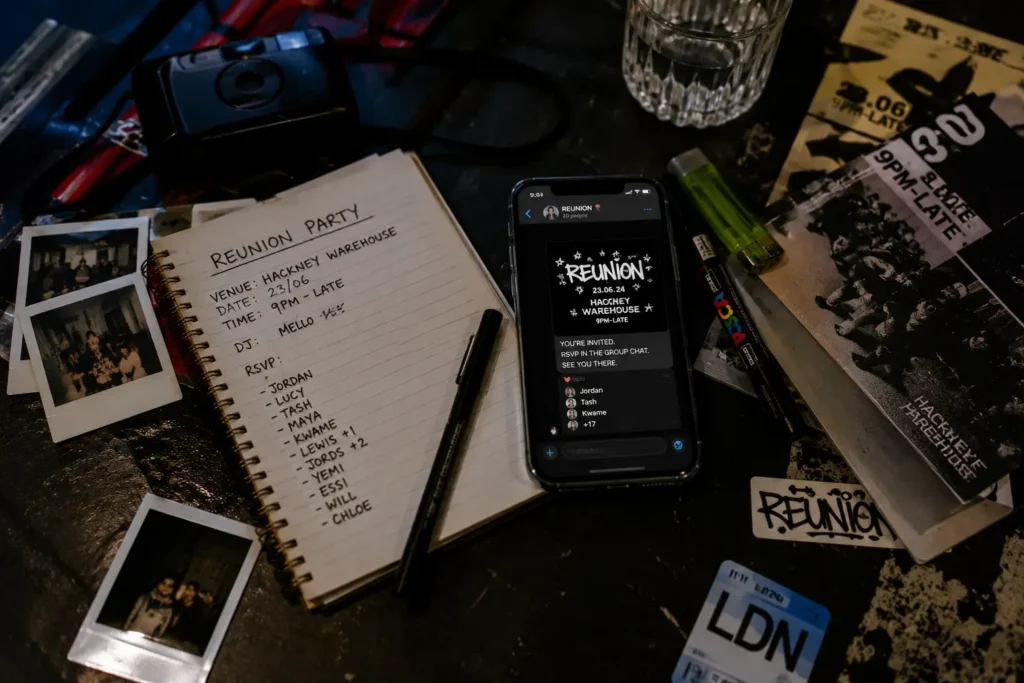
For brands, the easy read is to treat this as just another platform to occupy. The more useful read is that young people are building social worlds with more control over context – wanting to know who’s there, how the night will feel, and whether the social risk is worth it before they turn up. That has real consequences for experience strategy: a brand event can’t rely on blunt tools like “open” or “exclusive.” It has to understand the social conditions that make people want to attend, stay, bring someone, post about it afterwards, or keep the whole thing to themselves.
The New Cultural Skill Brands Need Is Inference
If youth culture is becoming less visible, brands need to get better at inference – not guessing, but reading the edges of behaviour more carefully. What moves from private to public? What language already sounds exhausted by the time it reaches the feed? What are young people actively protecting from visibility, and what do they only choose to share after the moment has passed?
That makes the work slower, but sharper. Instead of chasing every public trend, brands need to understand the conditions that produce trends before they become content – which often means deeper qualitative research, conversations with people who move between scenes rather than only the creators who speak to everyone, and accepting that the most useful insight won’t always arrive as a screenshot.
That can be uncomfortable, because private culture resists easy proof. It doesn’t hand over a clean metric, a neat content example, or a public signal that drops straight into a slide – but that’s exactly the point. If everyone can see the same thing, the advantage is already shrinking.
What Dark Social and the Cosy Web Mean for Brand Strategy
This has real implications for brand strategy. Three shifts are worth making, in order of how much they cost to get wrong:
- Stop treating visibility as a proxy for relevance. A quiet feed doesn’t mean disengaged culture – check whether the conversation has moved into private sharing before assuming it’s gone.
- Look for where trust already exists, rather than trying to build reach from scratch. Cosy web spaces reward brands that are useful or genuinely interesting to the community, not brands that show up loudly.
- Accept the measurement gap instead of fighting it. Some of the most valuable signal about your audience will never show up in analytics – plan research and insight work that can account for that, rather than optimising only for what’s trackable.
FAQs: Dark Social & The Cosy Web
Is dark social the same as illegal or hidden internet activity?
No, dark social is not illegal or hidden activity – it simply refers to private, untracked sharing like WhatsApp messages or emails. It’s a measurement problem for brands, not a security or legal issue.
Is the cosy web the same as having a private social media account?
No, the cosy web is not the same as a private account. A private account still lives on a public platform, while the cosy web refers to separate, smaller spaces – Discord servers, group chats, newsletters – built around trust and shared interest rather than public performance.
Why can’t brands just join cosy web spaces directly?
Brands generally can’t buy their way into cosy web spaces, because most are specifically designed to keep brand activity out. Genuine access tends to come from being useful or relevant to the community first, not from paid placement.
Is dark social and cosy web behaviour common among all young people, or just a niche?
It’s common, not niche – dark social and cosy web behaviour is now mainstream among Gen Z specifically, and older generations are increasingly adopting similar private-sharing habits of their own.
How NERDS Helps Brands Find the Signal They’re Missing
Youth culture isn’t becoming less influential, it’s becoming less available. The brands that win won’t be the ones forcing themselves into every private space. They’ll be the ones who understand why those spaces matter, what people protect inside them, and what kind of behaviour eventually escapes into public view.
NERDS is a London-founded youth and culture marketing agency that’s been immersed in street and youth culture since 2007. We work with brands including Nike, Puma, and The North Face, translating hard-to-reach cultural insight into strategy and creative that actually lands with hard-to-reach youth audiences – not just the parts of culture that happen to be visible.
If your brand can’t tell whether its audience has gone quiet or just gone private, that’s exactly the kind of question our work is built to answer:
- Market Research
- Brand Strategy
- Creative Strategy
- Insights
- Culture Marketing
- Cultural Insights
- Audience Insights
- Gen Z Marketing
- Youth Research
- Gen Z Strategy
- Gen Z Research
- Youth Strategy
Get in touch to talk about where your audience has actually gone.