No monoculture, no subculture? Part 2 of 3
Not so long ago, belonging to a style tribe took time. Punks, mods, skaters – each came with a uniform, a soundtrack and a set of codes you had to learn before anyone took you seriously. Now, an aesthetic can be named, packaged up on TikTok Shop and forgotten within a matter of weeks.
Part of the reason is the dissolving of monoculture. As trends and behaviours scatter across smaller and smaller aesthetics and online pockets of community, there’s less of a clear mainstream to define yourself by, or against. Which is why the debate on the death of subculture keeps resurfacing: if you can adopt any look you like without the years of ideological immersion, what’s left to belong to?
That evolution is real, and unavoidable – subcultural expression has become faster and increasingly borderless. But recently, there are signs of a counter-current. Writing for sabukaru, Abeer Salah describes Gen Z as “reaching for forms of cultural permanence and community that the current internet was structurally designed to prevent”. Longevity, deeper knowledge and participatory commitment are creeping back in, even if, for now, they still play out online.
In the second of three posts on the theme, we’re looking at a menswear aesthetic where what you know matters as much as what you wear.
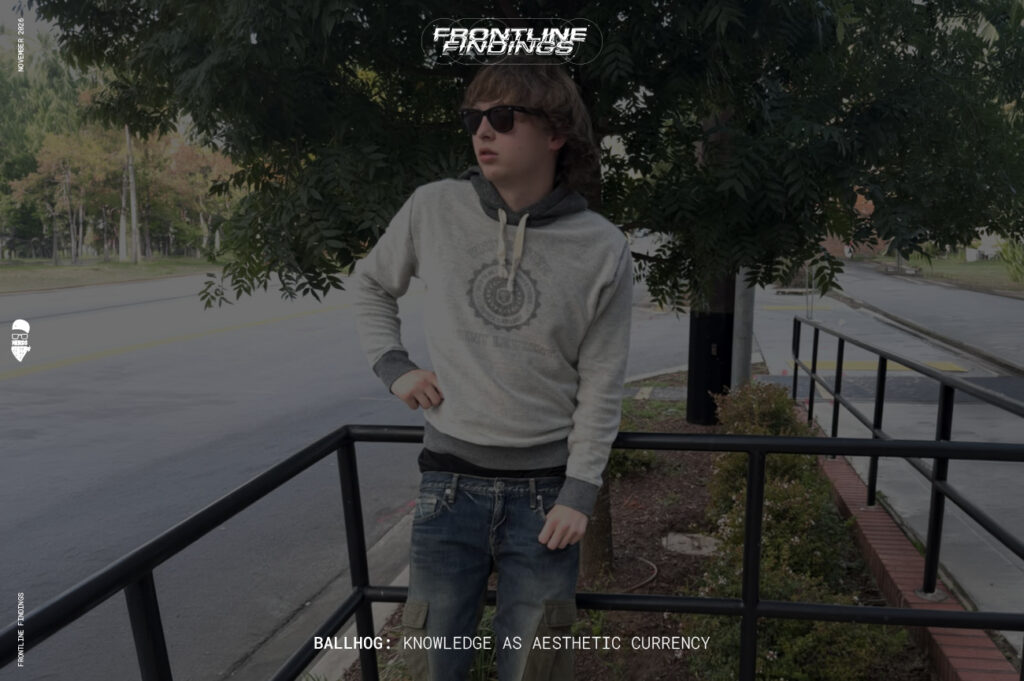
One example sitting at the intersection of internet culture and deeper knowledge is the aesthetic designated Ballhog. The look exists to be exhibited and debated online, with young men showcasing their take, and in particular hoping to demonstrate a level of ‘niche’ knowledge or references, opening themselves up to either praise or derision in the comments.
The overall look itself is not especially unique, but it is defined more by the references wearers put together, requiring a certain level of fashion understanding. Adjacent to “archive” style – which it can be pitted against – archival denim and 2000s designer Japanese streetwear are core components of the look. What potentially separates it from other transient TikTok aesthetics is the irreplicability that defines it, TikTok shop cannot sell a legitimate version of Ballhog.
Acquiring the knowledge required to replicate the look is easy; the same barriers that would have surrounded the brands these kids are wearing when they first appeared no longer exist. However, the fact the appetite for a credibility-based aesthetic is gaining traction points to the desire for fashion trends that do require more of the wearer.
For brands it’s an opportunity to add friction back into the relationship with consumers. Protect brand history, gatekeep information so that new fans have to seek it out, and can then use it to project their knowledge.