No monoculture, no subculture? Part 3 of 3
Most of us say we want to spend less time on our phones. Very few of us are actually managing it. That tension is especially sharp for young people, and it ties into a bigger question we’ve been asking about youth culture: with no monoculture, is there still room for subculture?
The mainstream isn’t what it used to be. As trends and behaviours disperse across ever-smaller aesthetics and online pockets of community, the sense of one shared culture – the thing subcultures once defined themselves against – has blurred. Add the ability to adopt any aesthetic overnight, and it’s easy to see why subculture keeps being declared dead.
But there are signs Gen Z is pulling the other way, back towards the traditional hallmarks of subculture: longevity, deeper knowledge, participation over passing exhibition. And perhaps the next evolution of subculture lives in the space between – offline tangibility and authenticity, circulated and amplified online.
In the last of three posts on the theme, we’re looking at a very physical version of that idea, and one with plenty of history behind it.
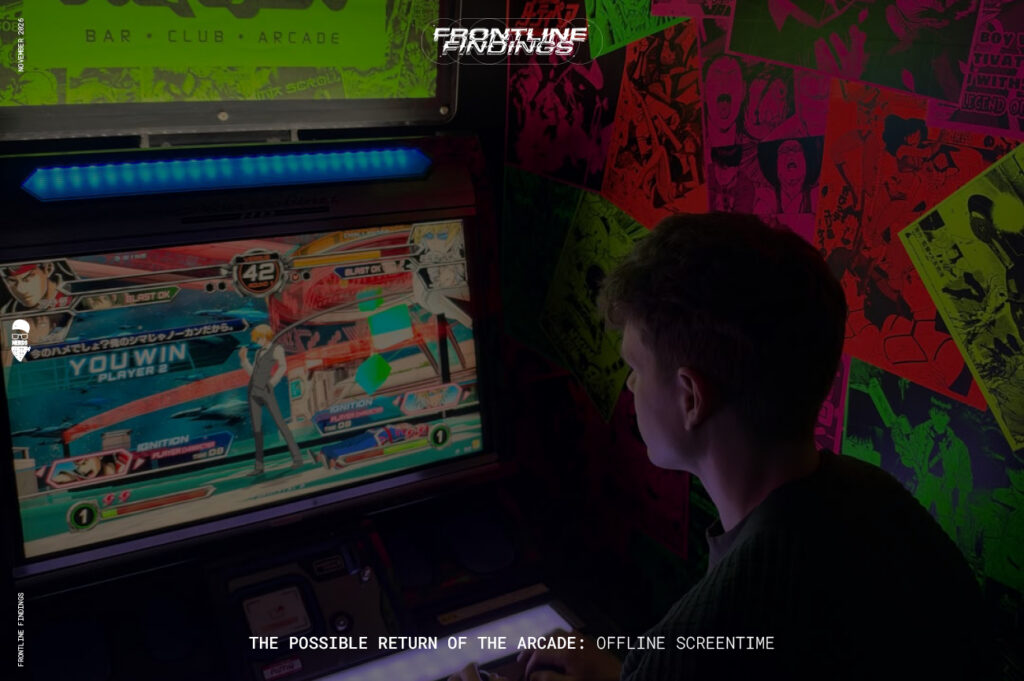
Perhaps the most tangible expression of an interest in traditional subcultural behaviours is the potential return of IRL gaming arcades.
NQ JPN opened in London this week, a second location for the popular gaming bar. While positioned as an alternative night out venue, what defines it is its focus on imported Japanese arcade games, offering gamers unique experiences that cannot be easily recreated on a home console. This replicates the experiences of 80s and 90s game arcades which became social hubs for like-minded individuals to participate in physical community.
Gaming communities have thrived online, and provide invaluable ways to connect. But, with so many young people in particular wanting to get offline, while still reporting significant screen time, more interest-based physical spaces could help bridge their on and offline worlds.